Statistical errors

Some day when I have an abundance of emotional energy to spare, I will write my full rant about the toxic promises of commercial A/B testing. For now, I’ll just reference this:

Consider Motyl’s study about political extremists. Most scientists would look at his original P value of 0.01 and say that there was just a 1% chance of his result being a false alarm. But they would be wrong. The P value cannot say this: all it can do is summarize the data assuming a specific null hypothesis. It cannot work backwards and make statements about the underlying reality. That requires another piece of information: the odds that a real effect was there in the first place. To ignore this would be like waking up with a headache and concluding that you have a rare brain tumour — possible, but so unlikely that it requires a lot more evidence to supersede an everyday explanation such as an allergic reaction. The more implausible the hypothesis — telepathy, aliens, homeopathy — the greater the chance that an exciting finding is a false alarm, no matter what the P value is.

These are sticky concepts, but some statisticians have tried to provide general rule-of-thumb conversions (see ‘Probable cause’). According to one widely used calculation5, a P value of 0.01 corresponds to a false-alarm probability of at least 11%, depending on the underlying probability that there is a true effect; a P value of 0.05 raises that chance to at least 29%. So Motyl’s finding had a greater than one in ten chance of being a false alarm. Likewise, the probability of replicating his original result was not 99%, as most would assume, but something closer to 73% — or only 50%, if he wanted another ‘very significant’ result. In other words, his inability to replicate the result was about as surprising as if he had called heads on a coin toss and it had come up tails.

Critics also bemoan the way that P values can encourage muddled thinking. A prime example is their tendency to deflect attention from the actual size of an effect. Last year, for example, a study of more than 19,000 people showed that those who meet their spouses online are less likely to divorce (p < 0.002) and more likely to have high marital satisfaction (p < 0.001) than those who meet offline (see Nature http://doi.org/rcg; 2013). That might have sounded impressive, but the effects were actually tiny: meeting online nudged the divorce rate from 7.67% down to 5.96%, and barely budged happiness from 5.48 to 5.64 on a 7-point scale. To pounce on tiny P values and ignore the larger question is to fall prey to the “seductive certainty of significance”, says Geoff Cumming, an emeritus psychologist at La Trobe University in Melbourne, Australia. But significance is no indicator of practical relevance, he says: “We should be asking, 'How much of an effect is there?', not 'Is there an effect?'”

Source: Scientific method: Statistical errors : Nature News & Comment

Also: ” Science Isn’t Broken — it’s just a hell of a lot harder than we give it credit for.” on fivethirtyeight.com
Kevin Kelly on time vs. money

Here is what I learned from 40 years of traveling: Of the two modes, it is far better to have more time than money.

When you have abundant time you can get closer to core of a place. You can hang around and see what really happens. You can meet a wider variety of people. You can slow down until the hour that the secret vault is opened. You have enough time to learn some new words, to understand what the real prices are, to wait out the weather, to get to that place that takes a week in a jeep.

Money is an attempt to buy time, but it rarely is able to buy any of the above. When we don’t have time we use money to try to get us to the secret door on time, or we use it avoid needing to know the real prices, or we use money to have someone explain to us what is really going on. Money can get us close, but not all the way.

Source: More time is better than more money. – Ronda, Spain — A Hi Moment

Mixed media, Sunday 23 August 2015

I’ve surprised myself by actually having read a few books over the last couple of weeks:

  • High Crimes by Christopher Sebela and Ibrahim Moustafa. Intense thriller. I knew from reputation that it was dark, but it was even darker than I had anticipated. Genuinely classic noir.
  • The Martian by Andy Weir. Great story, well told. Classic “scientist as hero” science fiction that runs at a super fast pace. It’s all action (survival action rather than fight scenes), with no filler.
  • Field of Prey by John Sandford. An excellent episode in the series.
  • Not strictly a book, but Tim Urban’s latest post on WaitButWhy.com, “How (and Why) SpaceX Will Colonize Mars” is a fun read. It’s essentially SpaceX propaganda / Elon Musk fanfic, but I’m happy buying in to the whole space exploration thing, so I’m okay with that. I would love to personally see the earth from space some day. As far as I’m concerned, Go Elon Go!

Films:

  • Maleficent: Slightly sub-meh.
  • Magic Mike: Until recently I hadn’t spotted that this was directed by Steven Soderbergh. It was only when I read a couple of reviews that compared the sequel to the original that I caught on to the fact that – aside from the raucous stripping scenes – this is a melancholy film, reflecting on how easy it is to accidentally give up on your dreams, while you think you’re busy pursuing them. Very good.
  • Fast & Furious 7: Bonkers, but in a good way. Runs too long, though, especially the final sequence in LA.

Podcasts:

Limetown is a new 7-part podcast that starts off as investigative recent-historical reportage, but quickly moves into the realm of science-fiction suspense. (It’s fiction, cleverly disguised as reality.) The first episode is very good. Next one due in September.

https://soundcloud.com/limetown/episode-1-pilot

As well as 99% Invisible, I’ve added the Accidental Tech Podcast to my weekly listening. It’s soothingly geeky.

Music:

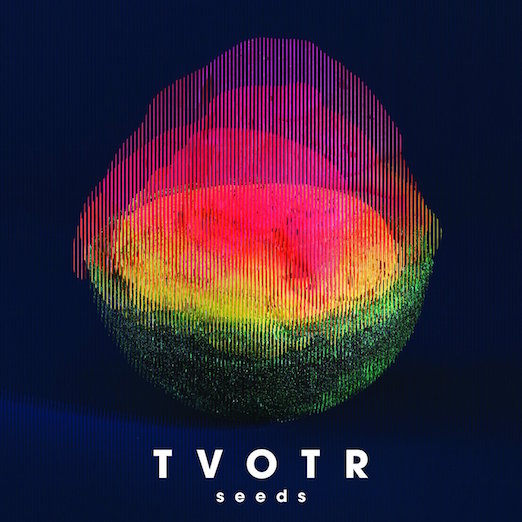
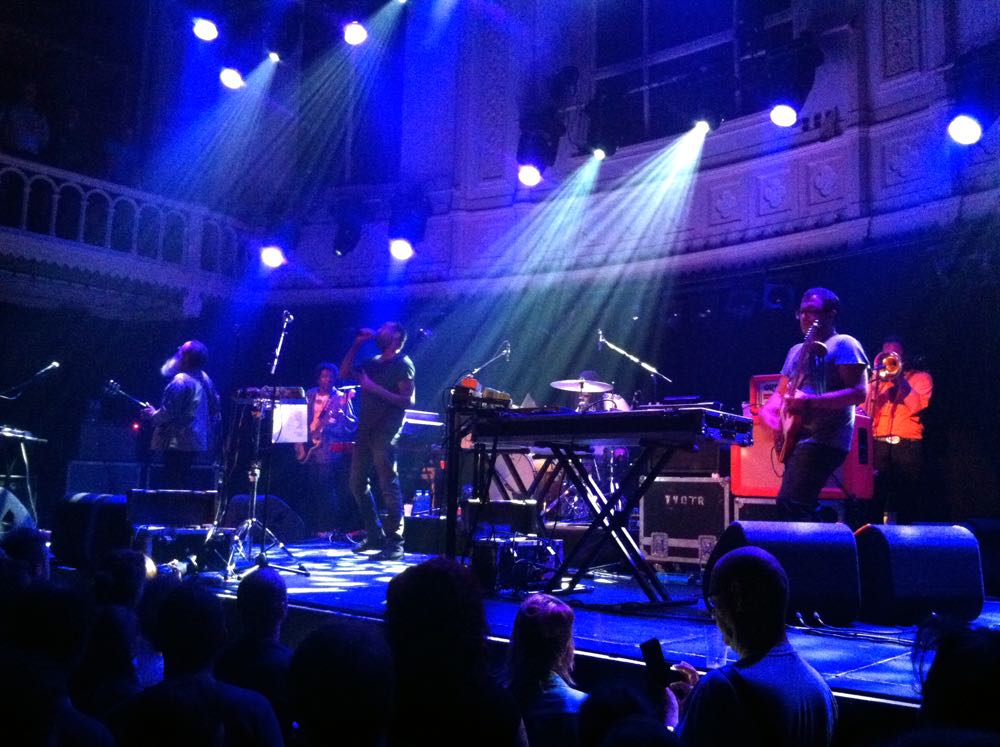
I’m going to see TV On The Radio at Paradiso tomorrow. They had to cancel the European leg of their tour earlier this year, including a date at Paradiso. For some reason I didn’t get a ticket for that show anyway, but I’m excited to be catching them this time round. I’ve been listening to their latest album Seeds a lot again over the last week, and it really is splendid.

I also remembered that I still have an eMusic subscription, so I plundered that for some new music: Working Girl by Little Boots, The Beyond/Where The Giants Roam by Thundercat, and Rips by Ex Hex — all excellent.

I’ve given up on Apple Music. I still listen to Beats One, but I’ve turned off auto-renewal for the trial subscription, and I’ve turned off iCloud integration to get rid of the tracks I’d “added to My Music” during the short time I was actively trying to use it. My main reason for ditching it is the way that Apple Music tries to blur the line between my music and their music. If I want to download a Apple Music track for offline listening (I spend a lot of time on airplanes and away from wifi and cellular signals; this is a key use case for me), its appearance in iTunes is identical to a track I have bought and own.

The DRM-free track I can back up and do whatever I like with. The Apple Music track is DRM-protected, and will be useless if and when I decide to abandon Apple Music, or when Apple Music decides to abandon me (by locking me out of my account for some reason, or by ceasing to exist). If you don’t download a track, but keep it as streaming-only, you can use the “iCloud download” status to distinguish see that it exists only in the cloud. But once you download it, short of doing a “get info” on the track and looking at its file extension, iTunes offers literally no way of selecting and filtering rented tracks in its UI.

Maybe if they did something about that, I’d give it a second try. Maybe. But for now, I’m getting comfortable with Spotify Premium for music discovery, collaborative playlists (also a key feature I use), and casual listening. iTunes is for the collection of music I own and can do with what I like (software licensing terms notwithstanding). I think that Apple Music is probably fine for many people. It’s just not for built for me. My next concern is that Apple keeps making iTunes worse and worse for the purposes I do care about.

The week of rock, 2-6 November 2015

A few weeks ago, around the time that I buckled down and bought the Foo Fighters ticket I’d been dithering about, I went a bit mad buying even more concert tickets. In particular, I filled in all the gaps for that entire week:

  • Monday 2 November: Battles at Melkweg. (New album “La Di Da Di” out on September 18th.)
  • Tuesday 3 November: Dutch Uncles at Paradiso (small room, yay!). This is amusing because…
  • Wednesday 4 November: Garbage at 013 in Tilburg (20 Years Queer anniversary tour) — with support by…Dutch Uncles. (Previously)
  • Thursday 5 November: The aforementioned Foo Fighters at Ziggo Dome
  • Friday 6 November: Gaz Coombes at Tolhuistuin. I missed him when he played Amsterdam back in February, so I’m glad to get a second chance.

Oh yeah. It’s like my own private festival.