Barenaked Ladies concert recordings

Exactly one year ago, I wrote a blog entry about an experiment by a music promoter to start selling professionally recorded versions of concerts on CD-R immediately after the gig. I thought it was a stupendous idea–I still do–but I haven’t heard anything more about it. Until today.

The Barenaked Ladies are currently on tour, and according to their blog they are going to be running with this idea themselves rather than leaving it to their promoters:

“We’re going to be recording most of the shows on this tour, and they will be available for sale online for download or we’ll send you a CD. Check out www.barenakedladies.com next week, and you’ll see more info. We intend to have these available about 2 days after each show – hopefully you like this new addition to our tours, and hopefully the sound quality is better than your cellphone or minidisk player, etc. We’ve got an engineer on the road with us who will be recording the shows to multitrack and mixing them specifically for CD, which should make each disc more of the Rock Spectacle quality and less like a board tape, which rarely sound great, simply because they’re mixed for the venue, not for home listening.”

Okay, so the recordings won’t be on sale immediately as you leave the gig, and the practice of artists themselves selling recordings of individual concerts after the fact is not new. But it’s still not exactly common. Big yay to the BNL for giving it a try.

Non-CDs

We went out on a short shopping trip yesterday afternoon. We bought some baby stuff (Fiona’s first dress) and some books (Tricia Sullivan’s Maul, amongst others). I would also have picked up a copy of Sarah McLachlan’s new album, Afterglow, but her record company seems not to have released it in CD format. Bummer! Instead, they’ve released it on some kind of shiny CD-sized disc that can only be played on “Home stereo equipment” and PCs running certain specific versions of Windows. Bummer! So I bought Start Something by the Lostprophets instead.

Yes, there are ways of getting around copy-protected discs and DRM-locked music files. But standing in the shop yesterday afternoon I was struck by an overwhelming wave of apathy. I love Sarah McLachlan’s music, and I would love to listen to her new album, but I really can’t be arsed trying to figure out how to get the songs off of the copy-locked CD and into iTunes. Because that’s the only way I listen to new music nowadays: we don’t have a stereo in our living room any more, we just have my PC and some speakers. The CD might work in my car’s CD player, but that’s not much use if I want to listen to the disc while reading a book on my sofa.

I feel like a PS2 owner who wants to play Halo but can’t, because it’s an XBox exclusive title. Is this the future of music? Platform exclusives, and platform incompatibility? If so, it sucks.

Psi Testing, part 2

In case anyone was in doubt about the entry I wrote the other day about psi testing: it was a joke.

The Remillard Institute for Metapsychic Research does not exist, and “Milieu Theory” is a reference to Julian May’s Galactic Milieu and Pliocene novels. (The Many-Coloured Land, The Golden Torc, The Nonborn King, The Adversary, Intervention, Jack The Bodiless, Diamond Mask, and Magnificat) These novels deal with the emergence amongst humans of “metapsychic” powers: telepathy, psychokinesis, coercion, farseeing, redaction (mental healing), and creativity. Intervention is the linking book between the two series, and is set partly in Edinburgh. Hence the joke.

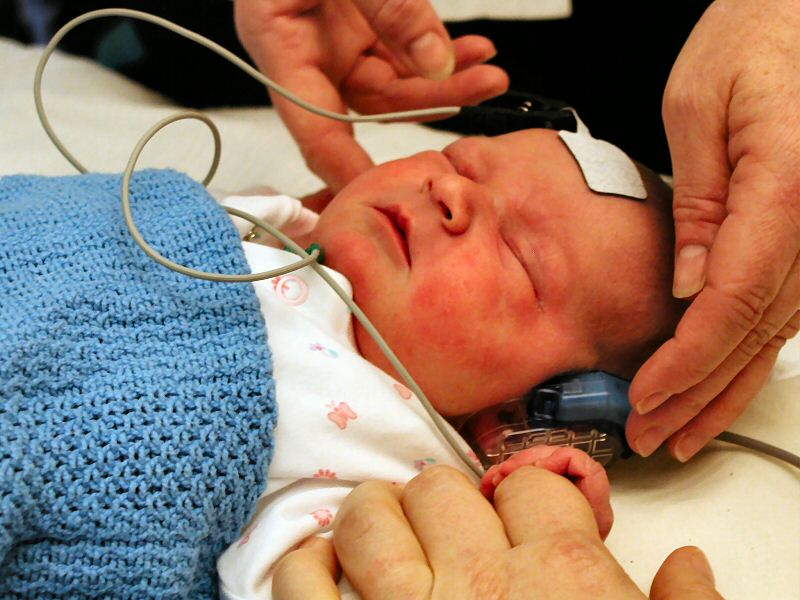
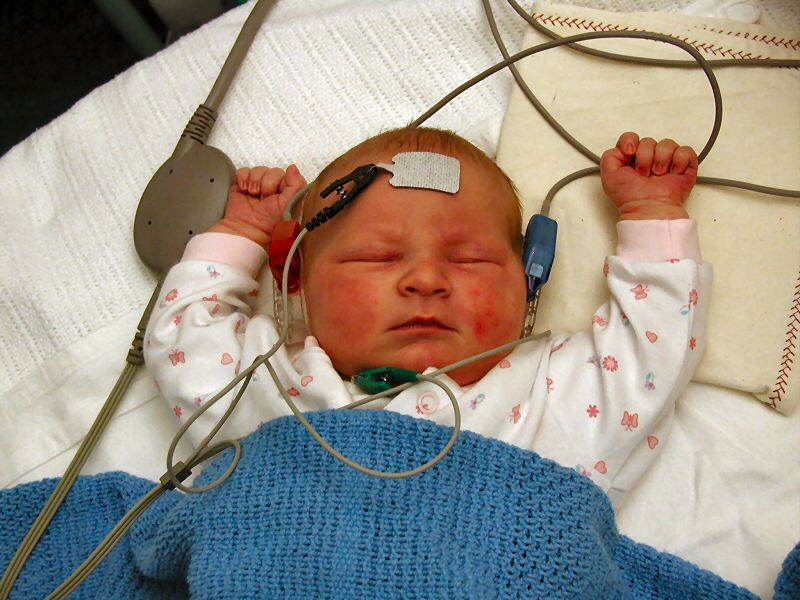
The photos of Fiona with electrodes strapped to her head are real, but I took them while she was having her hearing tested. Now this is very cool and 21st century: the audiologist stuck plastic headphones over her ears, and attached electrodes to her head. A computer played sounds of varying loudness and frequency through the headphones, and then the electrodes measured her brain’s response to the sounds. It’s a more sophisticated version of ringing a bell and watching to see if the baby twitches.

And yes, Fiona’s hearing seems to be just fine.

Interestingly, Edinburgh University actually has a real department of parapsychology, where they perform genuine, serious research into psychic abilities and phenomena.

Personal Search

I regularly find myself thinking, “I know I read a web page about [XYZ] last month, but where the hell was it?” I may be able to remember certain key phrases, and these sometimes help me find it again by using Google or some other search engine. Sometimes I can also find the page by doing a full-text search on my browser cache. (I use the “Find in Files” functionality of TextPad, because Windows’ own search is too slow.) But that doesn’t help if I was looking at the page more than a week or so ago, because it will have dropped out of the cache. (I have my cache set to 1GB.)

What I would really like is “Personal Search.” This would take the form of an extra option on a search engine that would alow me to restrict my searches to only the pages I have visited.

I don’t think it would be too difficult, technically. First of all, you would have to have some mechanism of reporting to the Search Engine Company (SEC) whenever you visit a page on the web. I think the Google Toolbar might already do this. Likewise, it shouldn’t be too hard to build something for Mozilla that would perform this task.

The Search Engine Company would then have to record this page view in a database, and associate it with your personal browsing history. It wouldn’t have to store the whole page itself, because chances are good that the page has already been spidered and is present in its main index already. If the page is new to the index, it will have to be added. (No big deal, and this even adds value to the main index as a whole.) Because the SEC only needs to store a list of URLs (and probably timestamps, too) against a user ID, this wouldn’t even take up impossible amounts of disk space.

Next, the SEC has to implement the search filter: whenever I do a search with the “only show results for pages I’ve visited” checkbox ticked, this should limit the search results appropriately, based on my browsing history. And voilà! My own Personal Search results.

There are a couple of down sides to this idea, though. For one, it requires the SEC to keep a complete track of my browsing activity. Depending on legal jurisdictions, this history could be used in ways I’m not entirely happy with. The scheme would have to have some way of turning off indexing completely, or for the duration of a browser session.

Secondly, not all web pages can be indexed by the SEC, and not all pages should be indexed by them, either. (For example, newspaper or magazine archives that require subscriptions.) There isn’t just the preference of the end user (me) to take into account, but also the preference of the web site owner. As a result, I may find that there are still gaps in my Personal Search. However, I think these gaps would still be less annoying than not being able to get back to web page XYZ that I remember from last month.

Finally, there’s a question of cost. To a certain extent, search engines fulfil a public service to the population of the Internet. “Personal Search” would be a service that I imagine people might be willing to pay for. After all, it means you don’t have to manage an enormous search index on your own computer. I could keep all the pages I’ve ever visited in a cache somewhere, but I really don’t want to spend a couple of hundred pounds on disk space every year.

It all sounds too easy. Can someone tell me now why this wouldn’t work? Or alternatively, can you tell me if there are any search engines out there that do this already?
Psi Testing

When babies are born, they undergo all sorts of tests to make sure they’re fit and healthy. There’s the standard APGAR test, which checks for Activity, Pulse, Grimace, Appearance, and Respiration. Then there are blood tests to check for a variety of syndromes that can’t be detected during pregnancy. All throughout the first two days, the baby is weighed, measured, poked and prodded, and passed from doctor to consultant to specialist to midwife dozens of times.

The most interesting test Fiona had, though, was an optional one: psi testing. Not everyone wants it, and it’s certainly beyond the scope of the NHS to provide it for all parents. However, the Remillard Institute (a privately funded Canadian research body) is currently sponsoring a trial programme at the Edinburgh Royal Infirmary, and we were offered the opportunity to take part.

It was all very sophisticated. Dr. MacDonald, the pediatric parapsychologist, attached a set of sensors to Fiona’s head, neck, and throat, and hooked her up to a so-called “cerebro-inductive rig.” The rig stimulated Fiona’s brain directly, and measured the response immediately. Her results showed no reaction for for Psychokinesis or Farseeing, but strong potential for Creativity, Redaction, and particularly Coercion. Cool!

Fiona
Fiona

I hadn’t realised that the field of pediatric parapsychology was so far advanced. We chatted to Dr. MacDonald about psi and Milieu Theory for a while afterwards, and she explained how the cerebro-inductive rig is only a very recent development. Until just a few years ago researchers couldn’t test babies or young children, because they had to rely on spoken, facial and physical reactions from the subjects themselves. Babies are obviously not capable of giving that kind of feedback.

It turns out the trial programme at ERI still has another three weeks to run, so we’ve set up an appointment to get Alex tested as well. It’s not something we need to do (we’ve already found out the hard way that he’s high-Coercion), but it’ll be interesting to find out if he has the same combination of psi abilities as Fiona, or if he’s likely to wreck the house with emergent PK when he hits adolescence.

Related Links:

Rejection and the Slushpile

Teresa Nielsen Hayden on rejecting manuscripts:

“Anyway, as I was saying, it realio trulio honestly isn’t about you the writer per se. If you got rejected, it wasn’t because we think you’re an inadequate human being. We just don’t want to buy your book. To tell you the truth, chances are we didn’t even register your existence as a unique and individual human being. You know your heart and soul are stapled to that manuscript, but what we see are the words on the paper. And that’s as it should be, because when readers buy our books, the words on the paper are what they get.”